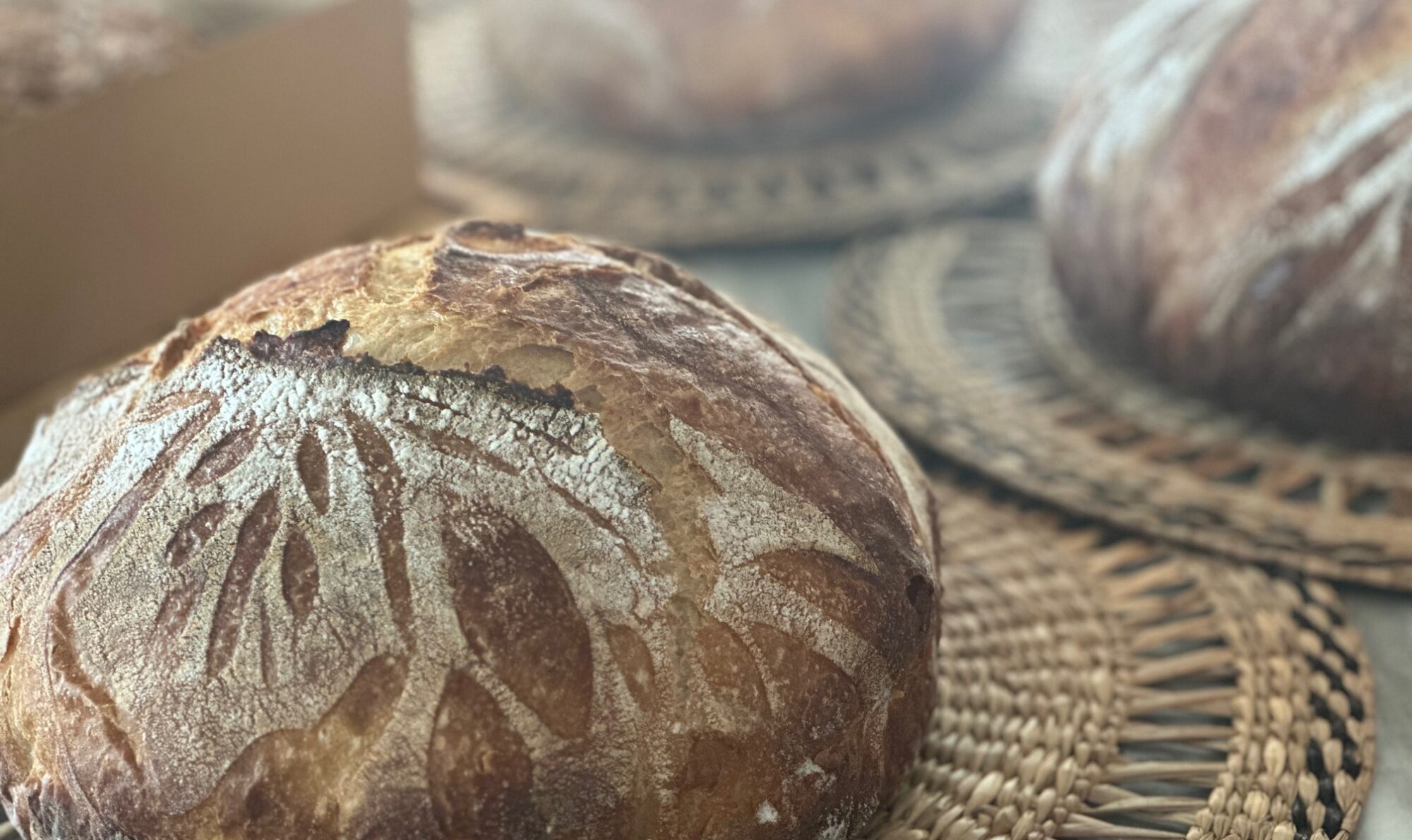
HEALTH BENEFITS OF SOURDOUGH BREAD
Sourdough acts as a prebiotic, with its fiber feeding the beneficial bacteria which is essential for a healthy, stable digestive system. During the fermentation process, these bacteria break down gluten structures, making the bread significantly easier to digest and lower in gluten than standard varieties.
When you pair this process with freshly milled ancient grains, you create a nutrient-dense powerhouse. Grains like Einkorn, Spelt, and Kammut are often better tolerated by those who struggle with modern wheat. Einkorn, for instance, possesses a much simpler DNA structure—containing only 14 chromosomes compared to the 42 found in hybridized modern wheat. These ancient wheats offer simpler gluten profiles and superior nutrient density, boasting higher levels of protein and minerals.
Click here to learn more about the importance of freshly-milled grains.
Furthermore, sourdough fermentation significantly increases the bioavailability of these vitamins and minerals by neutralizing phytic acid. Often called an “anti-nutrient,” phytic acid binds to essential minerals like iron, zinc, calcium, and magnesium, blocking your body from absorbing them. By breaking down these bonds, sourdough ensures your body actually receives the nutrients the wheat contains.
FROM SOURDOUGH TO BEER TO YEAST PACKETS – A SHORT HISTORY OF LEAVENING
Historically, sourdough was the standard for thousands of years, long before the modern digestive issues we face today.
Sourdough can be a challenging bread to make. It reacts differently to varying temperatures and humidity levels, and it requires significant time to rise properly. You cannot rush true sourdough. And THAT is why commercial bread-makers eventually moved away from sourdough and towards the newly discovered convenience of commercial yeast.
In medieval times, the beer industry exploded, opening the door that ancient Egyptians discovered long ago (barm – beer froth). Bread-makers and breweries worked side by side. The bread-makers began to use the froth from the top of the beer to inoculate their dough. They found an easy way to cheat the system to produce a lot more bread for people, lessening the rise times. Believe it or not Monks were tasked with the “roll” of being the local town’s brewer and baker! The French did stay true to their game and didn’t jump on the beer bandwagon like the English or the Germans did. The French kept to their sacred levain to continue to produce true sourdough. By the 1600’s some Frenchmen even tried sneaking in barm only for the government to completely ban the beer corruption (literally known as the Bread Yeast War). They were fighting for their right to fluffy white bread! No, you can’t make this stuff up!
Enter the Dutchmen in the late 1700’s. Brewers and distillers found a way to make a separate yeast product for commercial use. They began to sell “cream yeast” which was barm that was washed in order to removed the bitter flavor of beer and also to keep it from spoiling as quickly. It was also easier to transport than a bunch of foam.
All was good and well in this symbiotic relationship until the mid 1800’s when beer companies made a huge transition into producing lagers from their previously traditional ales. This caused an immediate severance to their bakery friends since lager yeast produced bitter bread and also fell to the bottom making it difficult and undesirable to use as a bread leavening agent.. Plus, lager liked the cold while dough likes the warmth. This reminds me all to closely of the Hawaii sugarcane debacle. While rats were feasting on the sugar, plantation farmers decided to import mongoose to take care of the problem. Unfortunately, whoever came up with that bright idea didn’t realize the mongoose would simply sleep on the job while their noctural foes continued to enjoy their midnight treats. Now back to a bake-off! Vienna decided to have a contest which made lager an instant hit, giving a final blow to the baking industry. Within 5 years all their breweries were now making lagers which left the bakers lagging for help.
In the 19th century, baker’s yeast was commercialized by the process of extracting a byproduct from breweries. This development allowed baked goods, such as breads and cakes, to achieve far more consistent results and cut the preparation time involved to a bare minimum. How liberating it must have felt to be a baker then- to be able to produce bread within an hour rather than a day! This industrialized shortcut, however, came at a significant cost to human health, a mistake that took nearly a century to recognize.
Authentic sourdough, leavened solely by a natural starter of wild yeast and bacteria, remains a topic of ongoing study for its impressive health benefits. Did you know our guts love diversity? Our diverse gut microbiomes thrive on the wide range of bacteria found in true sourdough, which in turn influences everything from our moods and decision-making skills to our immune systems. Additionally, the microbes themselves can also produce some B vitamins, making sourdough richer in usable nutrients like iron, zinc, magnesium, and B vitamins compared to conventional bread.
Most commercial “sourdough” found on grocery shelves isn’t real sourdough; it’s regular bread with yeast, vinegar, or flavorings added to mimic the taste, missing out on the benefits of traditional slow fermentation. Your palate might be fooled by a faux-sour flavor, but true sourdough’s benefits come from a reliance solely on a natural starter containing both wild yeast and bacteria for leavening. The final flavor profile—which can be milky, tangy, or somewhere in between—is an untamable, wild beast dependent on numerous variables. These factors include the starter’s unique ecosystem, the temperature during preparation, the specific grains used, and even the baker’s unique microflora and geographic location. True sourdough is a craft that can’t be boxed in.
Sourdough Origins:
Sourdough is basically a spontaneous fermentation process and is believed to have origins dating back to at least 3000 BC. Developed in ancient Egypt, then reached ancient Greece, Europe, and the Roman Empire.
Ancient Egypt cultivated wheat as well as other grains in the Nile River Valley. They manufactured enough bread to feed thousands daily. The ancient Greeks were introduced to leavened breads through Egypt. They import wheat from both Sicily and Egypt in trading Greeks started baking bread at night and improved the still of backing bread as well as updating equipment. Romans at a lot of bread. Freed slaves would learn the trade of bread baking and turned into professional bakers. Eventually, bakers became public officials.
During the European Barbarian migration, bread wasn’t the primary food and the art of industrialized bread-making faded out of memory. However, monasteries preserved the art until the twelfth century. The baker profession then made its reappearance in France. Bread making technology progressed further during the Middle Ages primarily in northern Europe. Europe had widespread breweries and they found they could use the barm from beer brewing as a leavening substitute to sourdough.
This led to baker’s yeast (compressed yeast) practically almost completely replacing sourdough by the 1800’s. Baker’s yeast became popularized due to how rapidly and simply it leavened the dough. However, although sourdough is much more time-consuming, the long fermentation time is what brings about it’s nutritious properties. And here we are, full circle, realizing they seemed to have had it right the first time.
Published Study On Sourdough
Why Choose Organic:
By choosing organic, you can minimize the exposure to harmful pesticides, synthetic fertilizers, gross sewage sludge, genetically modified organisms (GMO’s), or ionizing radiation. We are exposed to more than enough harmful toxins in this age we live in. Why not seek to minimize that as much as we can?
- Why Choose Sourdough
- Sourdough Origins
- Why Choose San Clemente Sourdough
- Why Choose Organic