ABOUT
- About Me
- Why Choose Organic
- Why Choose Sourdough
- Sourdough Origins
- Why Choose San Clemente Sourdough
About Me:
My name is Jennifer, I live in downtown San Clemente, CA. I never thought I would be so passionate about baking sourdough! I currently bake out of my home and recently decided it’s time to start opening up my home kitchen to the local community.
My sourdough journey began in 2020. With so many items becoming unavailable, I remember buying a bag of flour and then realizing I really should at least learn how to bake bread. I had some baking experience prior but my desire to be more self-sufficient as well as having more healthier options available to my household grew exponentially that year. This catapulted me into the world of fermentations which led me to sourdough. My daughter also loved sourdough and kept begging me to learn how to make it for her. I knew it was healthier option so I eventually set out to learn it so I could choose my own ingredients.
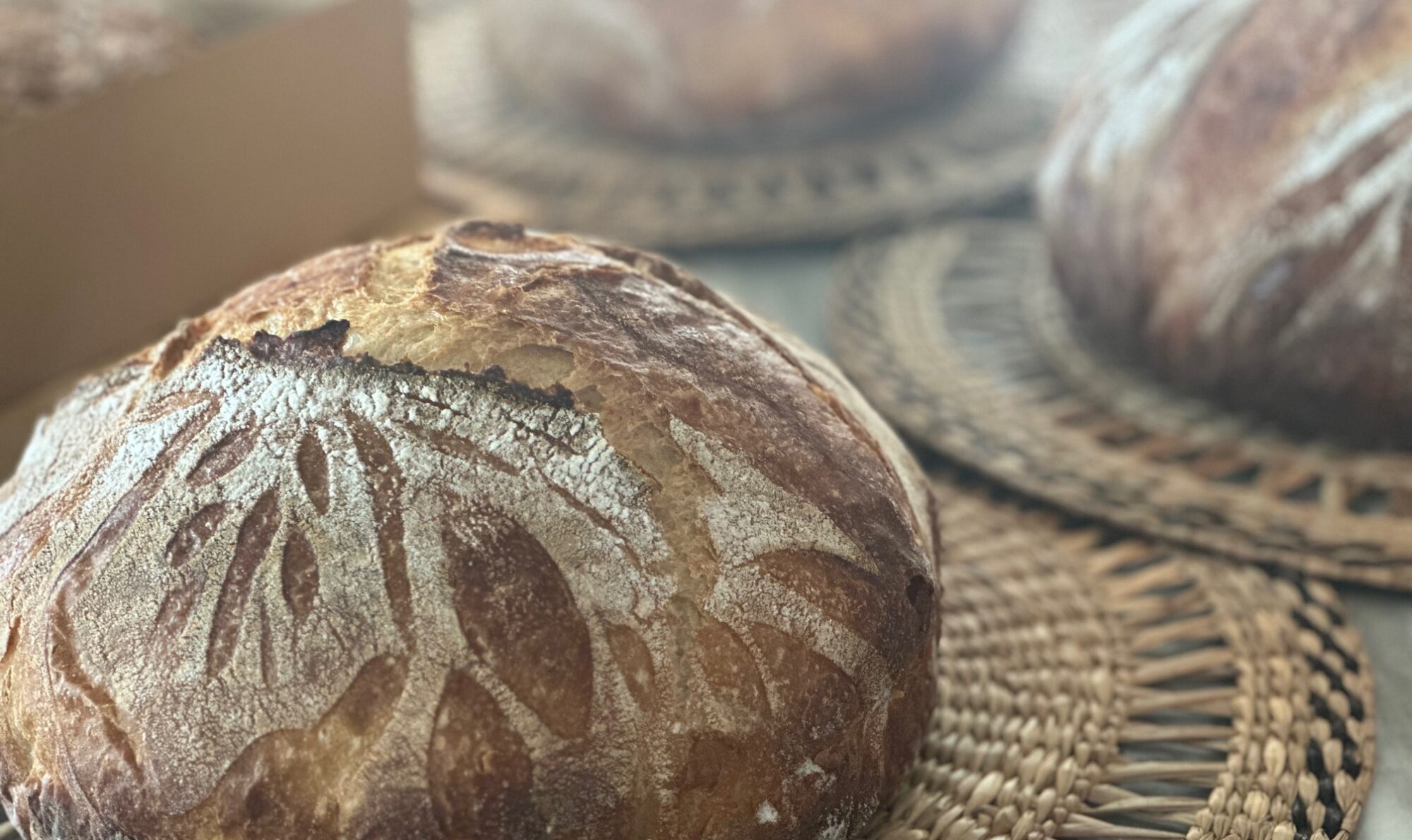
I received a starter from a friend which was touted as having originated from a 50 year old batch of San Franciscan starter. Once I got the nerve to experiment with it, I was determined to make a crunchy, fluffy, beautiful artisan loaf and the rest is history. There is something so rewarding in pulling out a freshly baked, crunchy ball of goodness right out of the oven. I have now decided it’s time for me to share that sourdough joy with other locals within the area of San Clemente.
Why Choose Organic:
By choosing organic, you can minimize the exposure to harmful pesticides, synthetic fertilizers, gross sewage sludge, genetically modified organisms (GMO’s), or ionizing radiation. We are exposed to more than enough harmful toxins in this age we live in. Why not seek to minimize that as much as we can?
Why Choose Sourdough:
Sourdough acts as a prebiotic, with its fiber feeding the beneficial bacteria essential for a healthy, stable digestive system. During the fermentation process, these bacteria break down gluten structures, making the bread significantly easier to digest and lower in gluten than standard varieties.
When you pair this process with freshly milled ancient grains, you create a nutrient-dense powerhouse. Grains like Einkorn, Spelt, and Kammut are often better tolerated by those who struggle with modern wheat. Einkorn, for instance, possesses a much simpler DNA structure—containing only 14 chromosomes compared to the 42 found in hybridized modern wheat. These ancient wheats offer simpler gluten profiles and superior nutrient density, boasting higher levels of protein and minerals.
Furthermore, sourdough fermentation significantly increases the bioavailability of these vitamins and minerals by neutralizing phytic acid. Often called an “anti-nutrient,” phytic acid binds to essential minerals like iron, zinc, calcium, and magnesium, blocking your body from absorbing them. By breaking down these bonds, sourdough ensures your body actually receives the nutrients the wheat contains. Historically, sourdough was the standard for thousands of years, long before the modern digestive issues we face today.
Sourdough can be a challenging bread to make. It reacts differently to varying temperatures and humidity levels, and it requires significant time to rise properly. You cannot rush true sourdough.
In the 19th century, baker’s yeast was commercialized by the process of extracting a byproduct from breweries. This development allowed baked goods, such as breads and cakes, to achieve far more consistent results and cut the preparation time involved to a bare minimum. How liberating it must have felt to be a baker then- to be able to produce bread within an hour rather than a day! This industrialized shortcut, however, came at a significant cost to human health, a mistake that took nearly a century to recognize.
Authentic sourdough, leavened solely by a natural starter of wild yeast and bacteria, remains a topic of ongoing study for its impressive health benefits. Did you know our guts love diversity? Our diverse gut microbiomes thrive on the wide range of bacteria found in true sourdough, which in turn influences everything from our moods and decision-making skills to our immune systems. Additionally, the microbes themselves can also produce some B vitamins, making sourdough richer in usable nutrients like iron, zinc, magnesium, and B vitamins compared to conventional bread.
Most commercial “sourdough” found on grocery shelves isn’t real sourdough; it’s regular bread with yeast, vinegar, or flavorings added to mimic the taste, missing out on the benefits of traditional slow fermentation. Your palate might be fooled by a faux-sour flavor, but true sourdough’s benefits come from a reliance solely on a natural starter containing both wild yeast and bacteria for leavening. The final flavor profile—which can be milky, tangy, or somewhere in between—is an untamable, wild beast dependent on numerous variables. These factors include the starter’s unique ecosystem, the temperature during preparation, the specific grains used, and even the baker’s unique microflora and geographic location. True sourdough is a craft that can’t be boxed in.
Sourdough Origins:
Sourdough is basically a spontaneous fermentation process and is believed to have origins dating back to at least 3000 BC. Developed in ancient Egypt, then reached ancient Greece, Europe, and the Roman Empire.
Ancient Egypt cultivated wheat as well as other grains in the Nile River Valley. They manufactured enough bread to feed thousands daily. The ancient Greeks were introduced to leavened breads through Egypt. They import wheat from both Sicily and Egypt in trading Greeks started baking bread at night and improved the still of backing bread as well as updating equipment. Romans at a lot of bread. Freed slaves would learn the trade of bread baking and turned into professional bakers. Eventually, bakers became public officials.
During the European Barbarian migration, bread wasn’t the primary food and the art of industrialized bread-making faded out of memory. However, monasteries preserved the art until the twelfth century. The baker profession then made its reappearance in France. Bread making technology progressed further during the Middle Ages primarily in northern Europe. Europe had widespread breweries and they found they could use the barm from beer brewing as a leavening substitute to sourdough.
This led to baker’s yeast (compressed yeast) practically almost completely replacing sourdough by the 1800’s. Baker’s yeast became popularized due to how rapidly and simply it leavened the dough. However, although sourdough is much more time-consuming, the long fermentation time is what brings about it’s nutritious properties. And here we are, full circle, realizing they seemed to have had it right the first time.
Published Study On Sourdough
Why Choose San Clemente Sourdough:
If you are wanting freshly, home-baked, fully fermented sourdough bread straight out of the oven then you have come to the right place. As a home-microbakery, all items are made to order. This guarantees maximum freshness. Only top-quality ingredients are used without cutting corners. All orders go through both bulk and cold fermentation to gain the full benefits.
CONTINUE TO SHOP >