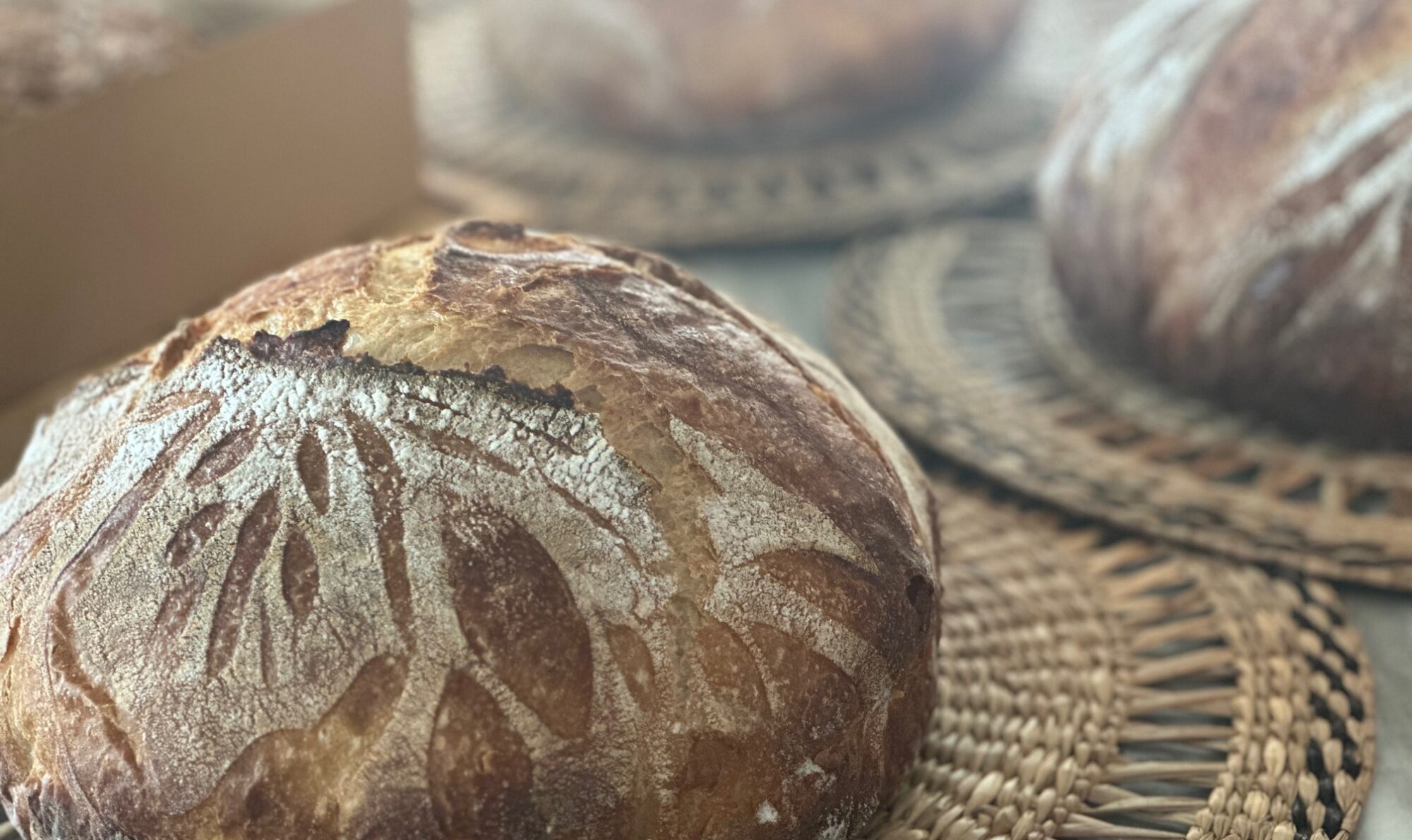
Benefits Of Sourdough

HEALTH BENEFITS OF SOURDOUGH BREAD

Sourdough acts as a prebiotic, with its fiber feeding the beneficial bacteria which is essential for a healthy, stable digestive system. During the fermentation process, these bacteria break down gluten structures, making the bread significantly easier to digest and lower in gluten than standard varieties.
When you pair this process with freshly milled ancient grains, you create a nutrient-dense powerhouse. Grains like Einkorn, Spelt, and Kammut are often better tolerated by those who struggle with modern wheat. Einkorn, for instance, possesses a much simpler DNA structure—containing only 14 chromosomes compared to the 42 found in hybridized modern wheat. These ancient wheats offer simpler gluten profiles and superior nutrient density, boasting higher levels of protein and minerals. Click here to learn more about the importance of freshly-milled grains.
Furthermore, sourdough fermentation significantly increases the bioavailability of these vitamins and minerals by neutralizing phytic acid. Often called an “anti-nutrient,” phytic acid binds to essential minerals like iron, zinc, calcium, and magnesium, blocking your body from absorbing them. By breaking down these bonds, sourdough ensures your body actually receives the nutrients the wheat contains. Historically, sourdough was the standard for thousands of years, long before the modern digestive issues we face today.

Sourdough can be a challenging bread to make. It reacts differently to varying temperatures and humidity levels, and it requires significant time to rise properly. You cannot rush true sourdough.

In the 19th century, baker’s yeast was commercialized by the process of extracting a byproduct from breweries. This development allowed baked goods, such as breads and cakes, to achieve far more consistent results and cut the preparation time involved to a bare minimum. How liberating it must have felt to be a baker then- to be able to produce bread within an hour rather than a day! This industrialized shortcut, however, came at a significant cost to human health, a mistake that took nearly a century to recognize.

Authentic sourdough, leavened solely by a natural starter of wild yeast and bacteria, remains a topic of ongoing study for its impressive health benefits. Did you know our guts love diversity? Our diverse gut microbiomes thrive on the wide range of bacteria found in true sourdough, which in turn influences everything from our moods and decision-making skills to our immune systems. Additionally, the microbes themselves can also produce some B vitamins, making sourdough richer in usable nutrients like iron, zinc, magnesium, and B vitamins compared to conventional bread. 

Most commercial “sourdough” found on grocery shelves isn’t real sourdough; it’s regular bread with yeast, vinegar, or flavorings added to mimic the taste, missing out on the benefits of traditional slow fermentation.  Your palate might be fooled by a faux-sour flavor, but true sourdough’s benefits come from a reliance solely on a natural starter containing both wild yeast and bacteria for leavening. The final flavor profile—which can be milky, tangy, or somewhere in between—is an untamable, wild beast dependent on numerous variables. These factors include the starter’s unique ecosystem, the temperature during preparation, the specific grains used, and even the baker’s unique microflora and geographic location. True sourdough is a craft that can’t be boxed in. 

Why Choose Organic:

By choosing organic, you can minimize the exposure to harmful pesticides, synthetic fertilizers, gross sewage sludge, genetically modified organisms (GMO’s), or ionizing radiation. We are exposed to more than enough harmful toxins in this age we live in. Why not seek to minimize that as much as we can?

  1. Why Choose Sourdough
  2. Sourdough Origins
  3. Why Choose San Clemente Sourdough
  4. Why Choose Organic

About Me

About Me:

My Journey With Sourdough:

My name is Jennifer, I live in downtown San Clemente, CA. I never thought I would be so passionate about baking sourdough! I currently bake out of my home and in 2024 I decided it’s time to start opening up my home kitchen to the local community.

My sourdough journey began in 2020 similar to many others. With so many items becoming unavailable, I remember buying a bag of flour and then realizing I really should  at least learn how to bake bread.  I was already fascinated with the idea of homesteading, making everything from scratch and already had some baking experience prior but my desire to be more self-sufficient as well as having more healthier options available to my household grew exponentially that year. This catapulted me into the world of fermentations which thankfully led me to sourdough. My daughter also loved sourdough and kept begging me to learn how to make it for her. I knew it was a healthier option so I eventually set out to learn it so I could choose my own ingredients. My husband, my daughter, and myself all spent some time being gluten-free for health reasons but we noticed it didn’t seem to help much. I started by diving into the health benefits of sourdough to figure out why it’s so different from standard store-bought bread. Down the rabbit hole I went—and as someone who loves a good discovery, I never looked back. That journey led me straight into the importance of freshly milled flour and ancient grains. Now, I find pure joy in share these incredible grains with anyone interested in trying them!

Once I received a starter from a friend and caught the nerve to experiment with it, I was hooked! The starter was touted as having originated from a 50 year old batch of San Franciscan starter.  I set out on a bumpy road to make that crunchy, fluffy, beautiful artisan loaf and the rest is history.  It was a learning curve but there is something so rewarding in pulling out a freshly baked, crunchy ball of goodness right out of the oven.  And now I get to share that sourdough joy with other locals within the area of San Clemente.

How To Feed Your Sourdough Starter

WHAT IT MEANS TO FEED YOUR STARTER:

Feeding your starter simply means adding flour and water to your starter and mixing it together. The water must be chlorine-free as chlorine will kill your starter. Do not use tap water. 

FEEDING METHOD 1 (THE “EYE BALLING IT” METHOD):

Use 2 rubber bands (or string/marker etc). Mark the current level of your starter on the jar.  Now mark another line or rubber band above that 1.5x to double that size. 

Example: your starter is 1 inch high in your jar from the bottom. You place a rubber band 2 1/2 to 3 inches high from the bottom. 

Now add flour up to the second/top line/rubberband. Once you’ve added flour, add some chlorine-free water and mix really well. Add the amount of water you prefer to create the right consistency you want to work with. See below.

FEEDING METHOD 2 (MEASURING WITH A SCALE):

Use either a 1:1:1 (starter: water: flour) ratio for a more firmer starter or 1:1:1.5, 1:1:2, or even 1:1:4 ratio for a more thicker (stiffer) starter.  1 part starter (50g), 1 part water (50g) 1 part flour (50g).

For 100% hydration, simply feed your starter with equal amounts of flour to water by weight.

HOW MUCH WATER TO ADD WHEN FEEDING YOUR STARTER:

This is a personal preference. Adding more water will cause your starter to ferment quicker, give more tang, and be easier to pour and incorporate into recipes.. Less water will allow it to stay in an active state for longer, giving it longer fermentation, It will be a stronger starter that gives a better rise and gives a fluffier crumb. Be sure to use FILTERED water. Do not use TAP water. The CHLORINE will kill your starter.

WHAT TO DO AFTER FEEDING:

Place a lid loosely on top. You can also use a coffee filter or breathable cloth on top. Let it sit on the counter and leave it to rise until it’s doubled in size. This can take as little as 3 hours in warm temperatures, or as long as 16 hours+ in cold temperatures.  You can place it in a warm environment such as an oven with the light on or near a fire place until it doubles in size. 

WHAT TO DO AFTER IT’S DOUBLED:

Bake with it! If you aren’t ready to bake with it tighten a lid on top and place it in the refrigerator.  It will remain active for a few days. If you aren’t planning to bake with it you can let it almost double then place it in the refrigerator.  It will continue to rise as it cools to the refrigerated temp. This will preserve it at the peak height You should still be able to bake bread with it 1-3 days later. If it deflated a little but it’s only been in the refrigerator for a day you should still be able to use it for bread baking. If its deflated a little but it’s been 2-4 days in the fridge you should still be able to bake other items such as muffins cookies etc. Just don’t use it for items that require strong starter. 

WHAT TO DO IF YOU HAVE TOO MUCH STARTER:

Separate the amount you don’t want to feed in a separate jar and keep it in the refrigerator for a backup or for discard recipes. 

THE DIFFERENCE BETWEEN SOURDOUGH DISCARD & ACTIVE STARTER: 

Sourdough discard is starter that already reached its peak state of fermentation then fell back down to its original size when it was first fed. Since you need peak sourdough performance to ensure your bread rises, it is not recommended to use discard unless you are using another leavening agent such as baker’s yeast. 

Active starter will be bubbly and doubled or even tripled in size from its original amount at its last feeding. This is the best time to use it for any sourdough recipes.

WHAT TYPE OF FLOUR TO USE:

You can use all purpose flour, bread flour, whole wheat or experiment with other grains such as rye, spelt etc.  You cam mix and match. RECOMMENDATION: Use all-purpose or bread flour as a base and boost it by adding a whole grain such as whole wheat, rye, spelt. 

FEEDING STARTER FOR LONG-TERM STORAGE: 

Simply feed it, giving it just enough water to incorporate and place it directly in the refrigerator.  Skip the step of letting it rise on the counter. Once in the refrigerator, it will ferment very slowly and go into a dormant state. If it has only been refrigerated for a few days, you can simply pull it out of the refrigerator and let it sit on the counter to double in size. If it’s been longer than 3-4 days, then you will need to feed it again when you are ready. Ideally every few weeks. 

IF YOU THINK YOU KILLED YOUR STARTER:

If you left it out or in the refrigerator for way too long and it has separated and smells like nail polish remover, it’s okay.  You have a very starved starter but you can still revive it. You will likely need to feed it multiple times to get it right. When you feed it, look for activity; bubbles and doubling. Also smell it. Once it smells like sourdough again and doubles and is nice and bubbly, it should be ready to go again. If you see actual mold (something fuzzy on top) then throw it out completely and get a new starter. Try, try again.